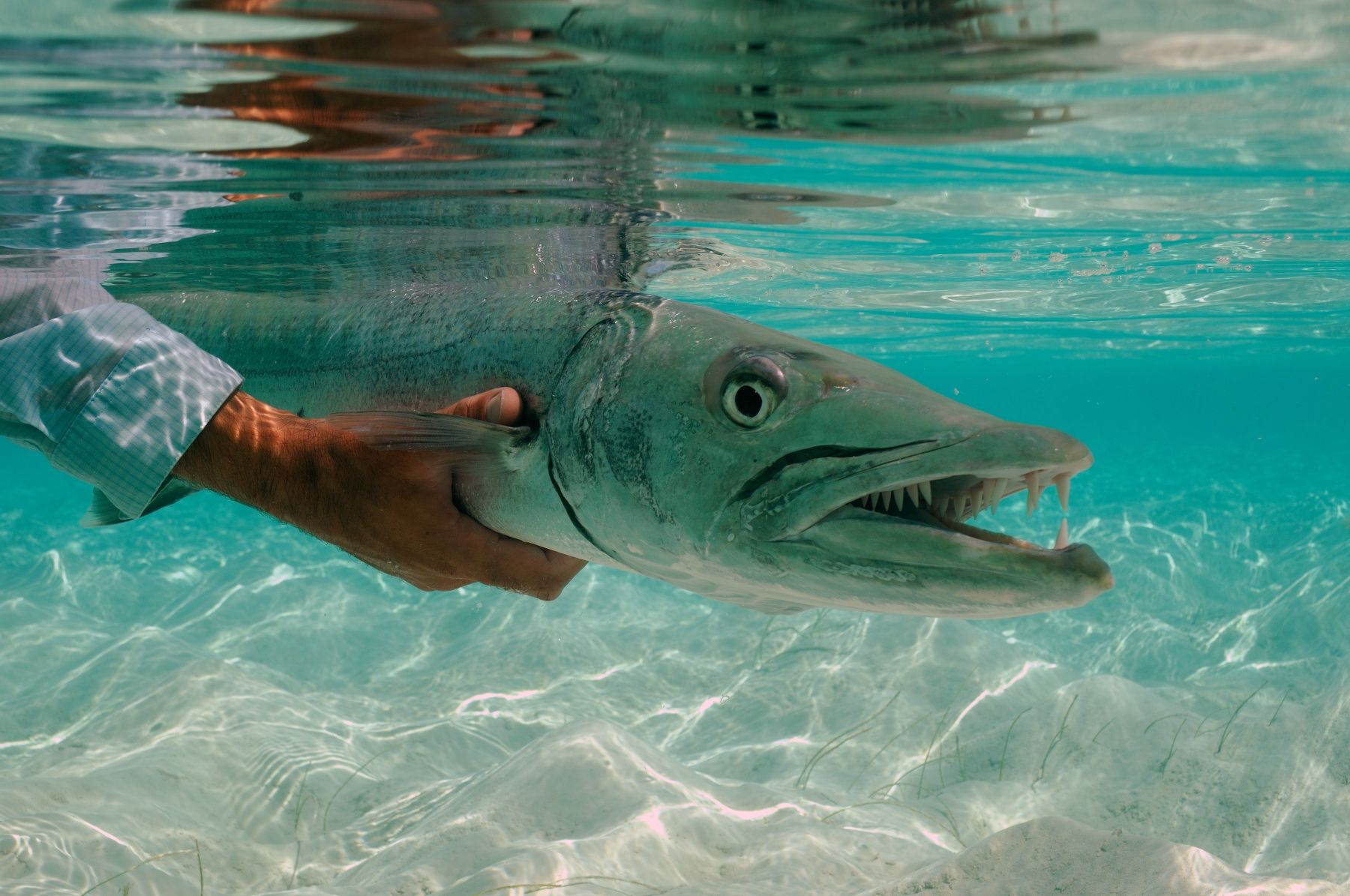
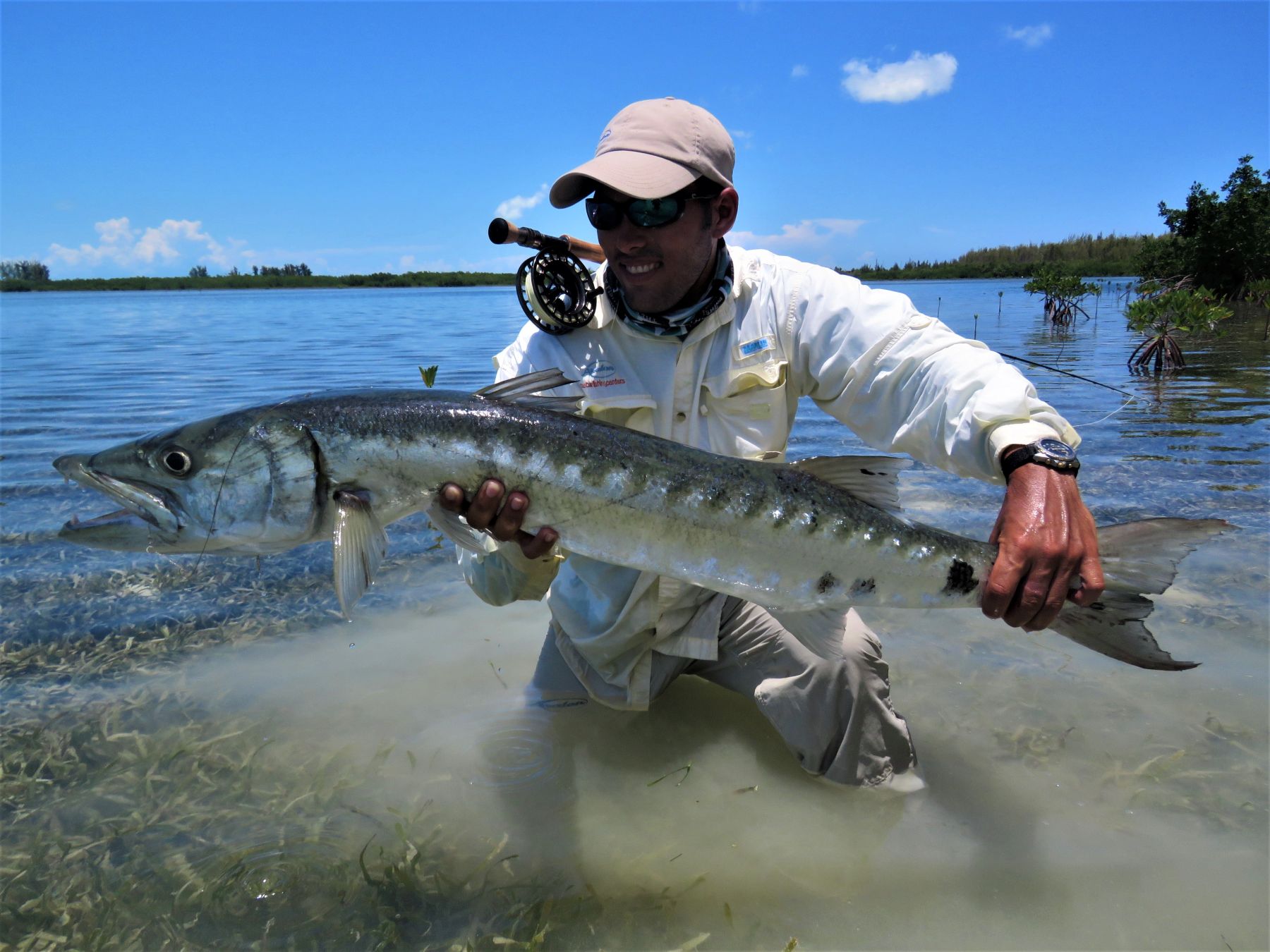
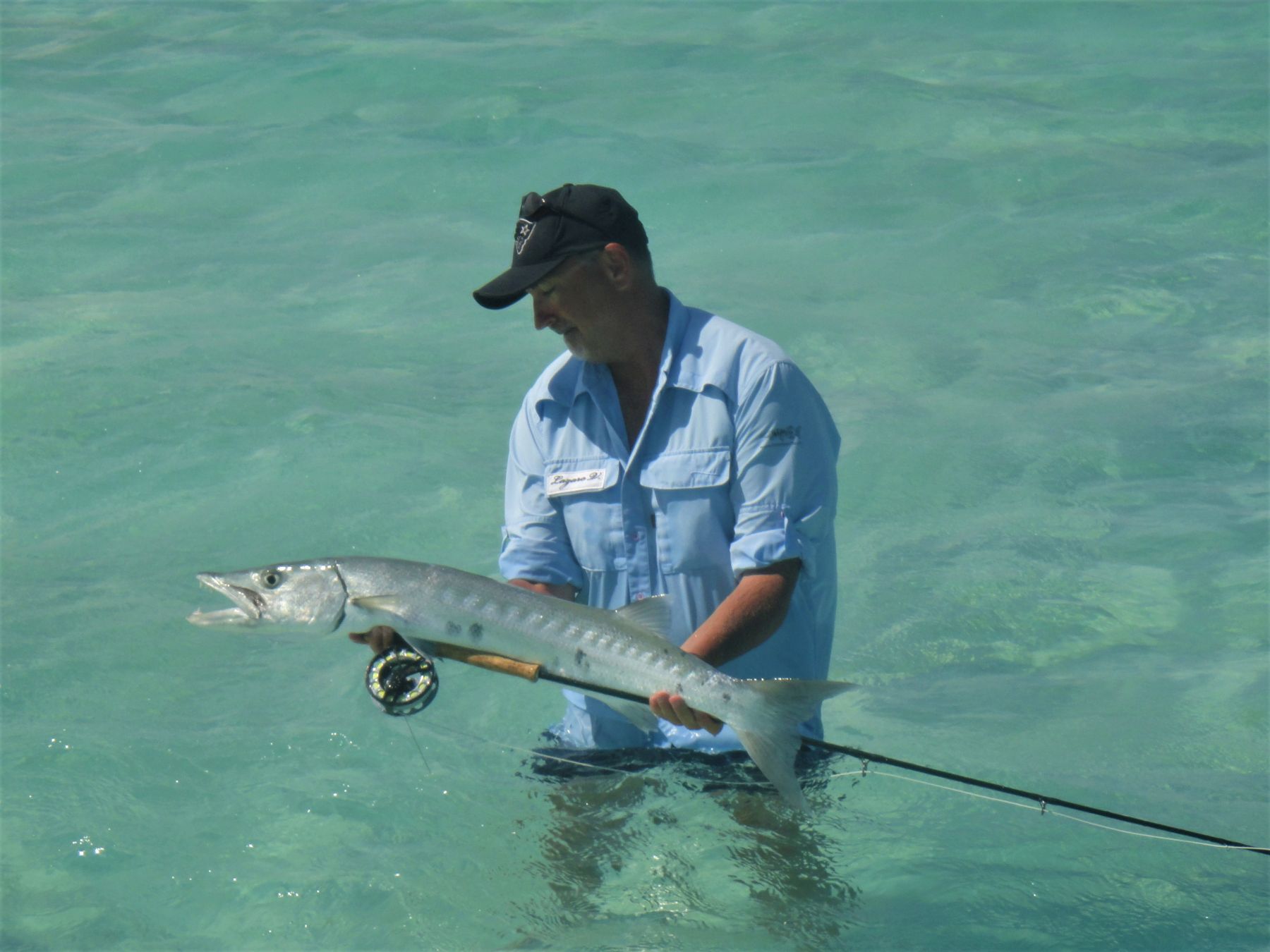
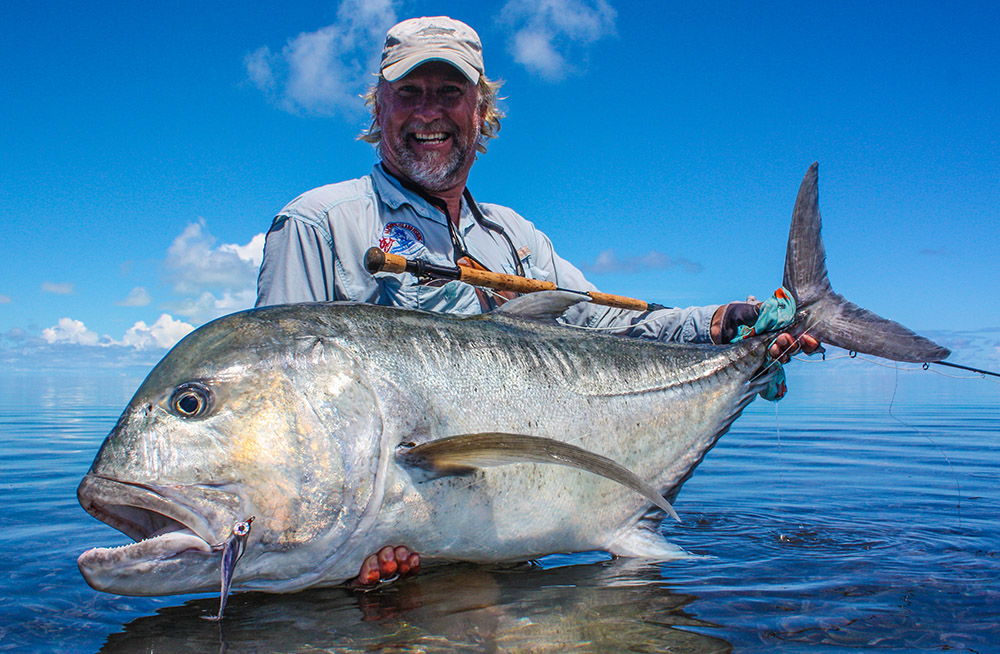
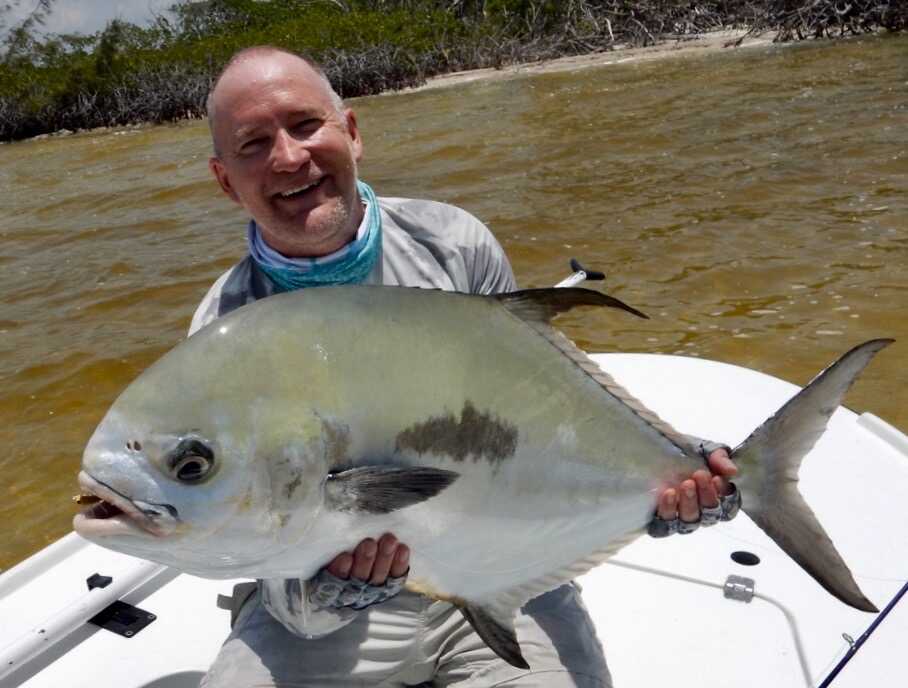
Often overlooked, the barracuda is what I like to call the “Dangerfield of the flats.” It just doesn’t get any respect whatsoever! And that’s a mistake. I spend a lot of time deliberately targeting big ‘cudas on fly when I’m on a flats trip, and I view them as one of the most exciting gamefish available in shallow water. When hooked, they’ll run like a big bonefish and jump like a tarpon. There is absolutely zero downside. And when handled properly, they make for a spectacular photo opp.
I generally only cast to fish over 40 inches and won’t bother with anything under a yard long. The smaller fish simply don’t offer much of a fight. But the bigger barracuda? They are a real challenge. Once hooked, they put on a highly satisfying aerial display that is electric. You can certainly use a tandem-hook fly like a Gamechanger in chartreuse or any long needlefish imitation that includes a stinger hook. That said, I actually prefer poppers. A lime green foam popper has produced more big barracuda for me than anything else. There’s something about the noise and surface disturbance that flips a switch in these fish.
For all their fearsome reputation, big barracuda are surprisingly skittish. Drop the fly too close and they’ll often spook — especially the larger fish. Instead, cast the fly 15 feet past the fish, well in front of its line of sight. Strip it back so it crosses in front of the fish, but not directly at it. One or two sharp pops is often all it takes. If the fish refuses but stays within range, here’s a trick that has worked for me many times. Cast in front of the fish and immediately rip the fly off the water the moment it lands. Repeat this four to five times. Then cast again and let it land naturally. Then pop it once or twice and be ready. They often get irritated enough that they finally decide to annihilate it.
I always keep a dedicated “cuda rod” in the skiff, ready to go. Below is my setup.
Rod: 9-weight
Line: Matching weight-forward fly line in a neutral color
Leader: No more than nine feet of straight 20-pound mono connected to the fly line
Wire: 12–18 inches of wire bite tippet is absolutely mandatory
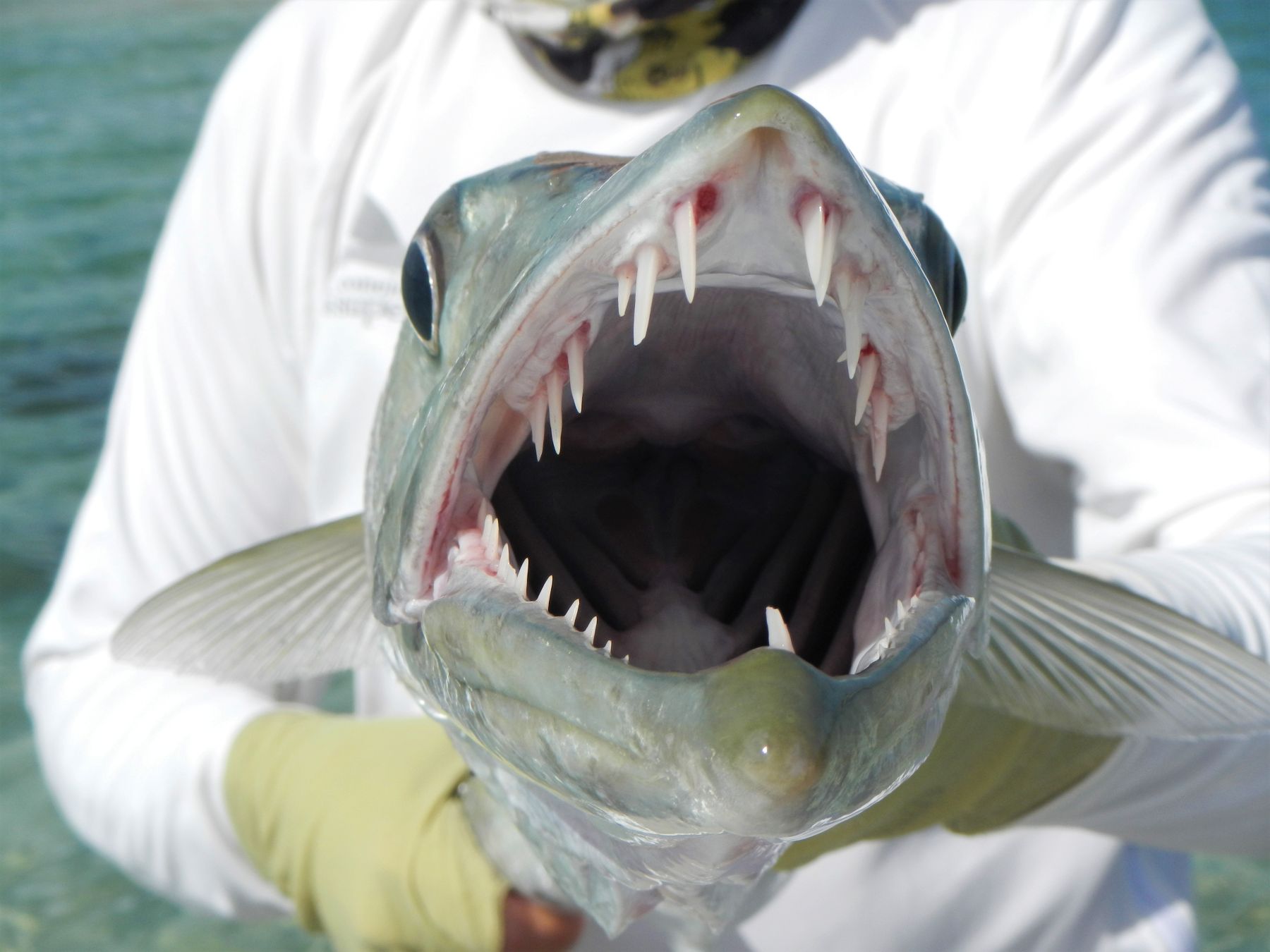
A 40+ inch barracuda has serious teeth. I’m a big fan of Rio Powerflex Wire Bite in 30-pound strength. It’s easy to tie and connect to your leader and is more than capable of handling the razor-sharp teeth that a big barracuda possess. I connect it to the leader using a Triple Surgeon’s Knot.
If you’d like a photo — and with a big fish, you probably will, let your guide handle it until you’ve gained experience with these fish. Those teeth are no joke. They are razor sharp and can do some real damage in the blink of an eye. Better to be safe than sorry.