Fly Fishing The Bahamas: What to Know Before You Book
There are very few angling destinations that get me fired up before a trip the way The Bahamas does. For the traveling angler, the islands deliver an incredible mix of opportunities, with each of the outer islands offering its own distinctive flavor of fishing. No matter where you end up, the combination of warm Bahamian hospitality, a deeply rooted fishing culture and world-class flats creates an experience that is very tough to rival.
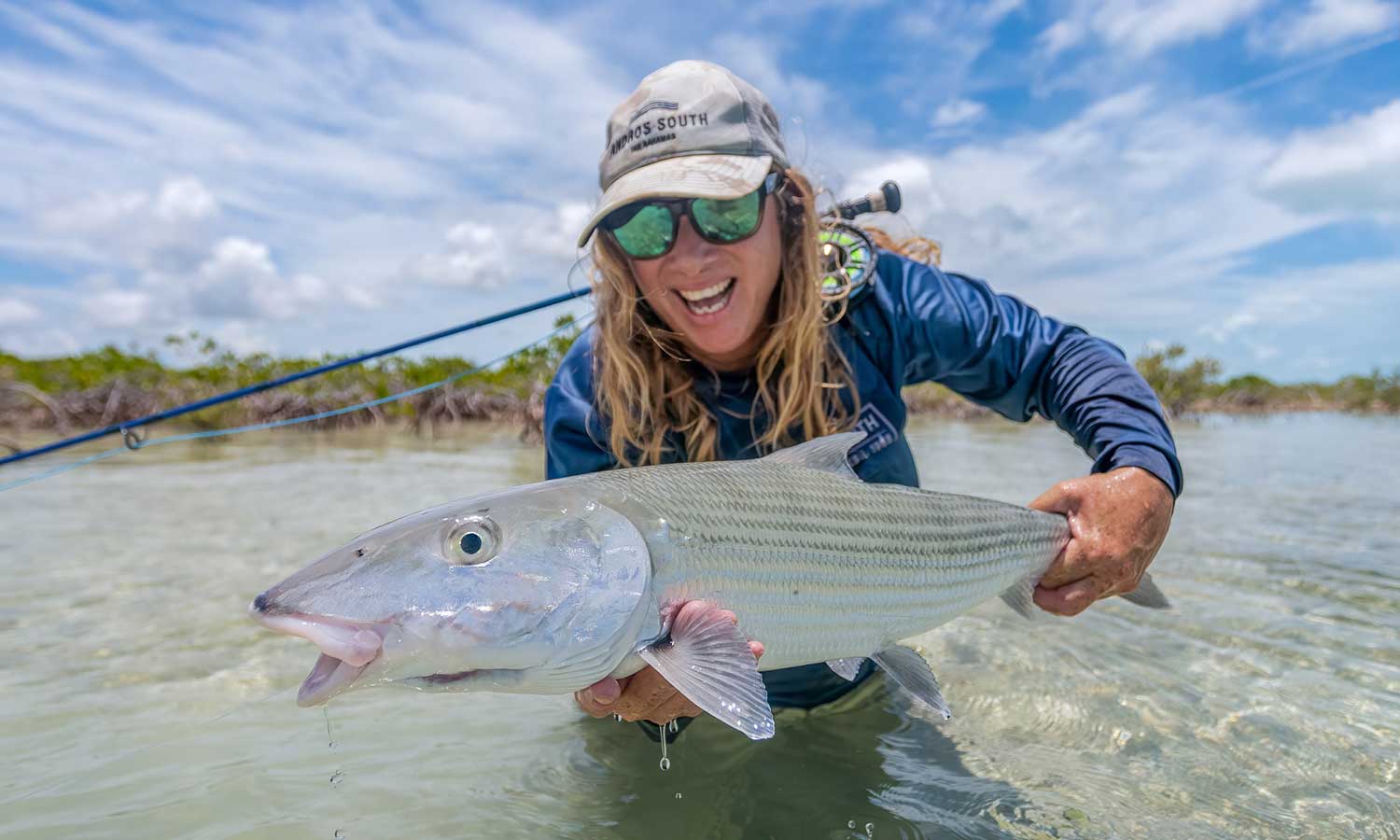
The big, plentiful bonefish are the star attraction. But the days are just as memorable for what comes after — the ice-cold Kalik in hand, the plate of fresh conch fritters on the table, and the stories of fish won and lost that carry well into the evening.
Bonefish country, with a few exceptions
The Bahamas is, without question, bonefish country. Tarpon and permit do exist in Bahamian waters, but they aren’t present in numbers that allow for consistent targeting. On Andros they are more species of serendipity than anything else — you don’t want to dedicate days to searching out permit when there are 10 pound bonefish lurking about.
That said, there are pockets of permit available in certain areas, and four are worth knowing about:
- The Joulter Cays are one of, if not the most fertile permit grounds in the Bahamas, with large permit to 40 pounds in good numbers and a fairly decent number of tarpon living in the cuts and channels. Without question, the best location in the Bahamas to specifically target permit and tarpon.
- The Berry Islands offer some of the most consistent permit fishing in the entire country. There are not many places in the Bahamas where you can target permit every day if that’s what you want to do.
- Grand Bahama holds permit of the typically large Bahamas variety. At North Riding Point Club they average around twenty-five pounds, with fish over forty-five pounds seen, and there’s the rare shot at a Bahamian Grand Slam when conditions align — tarpon up to a hundred pounds have been caught in these waters. Further west at Pelican Bay the fishery is still developing, with permit averaging over 20 pounds and a club record on fly of 38 pounds.
- Crooked Island and Acklins hold permit that have hardly ever seen a fly, present in great numbers on the flats and along the channels, often in the vicinity of large stingrays.
Everywhere else, come for the bonefish.
Choosing your island
The outer islands are remote and isolated, and many of them do require a week to fish properly. Others — the Berry Islands, Grand Bahama, much of Andros — are easy to get to and can be fished if you only have three or four days.
Andros. A 2,300 square mile island with the North, Middle and South Bights cutting through it east to west, creating vast areas for fishing and access to even more flats on the west side. Andros has more bonefish habitat than any other island in the Bahamas — the largest area in the world, which is what established it as the Bonefishing Capital of the World.
Abaco. The world-famous Abaco Marls on the west side offer good numbers of bonefish in the 2 to 5 pound range, with bigger fish fairly common. Since Hurricane Dorian closed the Abaco Lodge there is very little angling pressure in the marls and it’s not uncommon to not see any other anglers during the course of a day. The white sand and turtle grass flats on the eastern side produce big fish in the 8 pound plus category, with firm footing and sight casting to large singles. Delphi Club · Treasure Cay
Exuma. What separates this part of the Exumas from other noted bonefish destinations, like Andros, is the exceptional wading. Many of the flats are enormous and can be waded for hours — hard packed white sand offering sure footing and outstanding visibility, including White Bay, the Airport Flat and Channel Cut. The average bone weighs 4 to 7 pounds with much larger fish available regularly, particularly south around Little Exuma. Unlike many outer islands that require an overnight in Nassau each way, Exuma is easy to get to and out of in a single day. Club Peace and Plenty
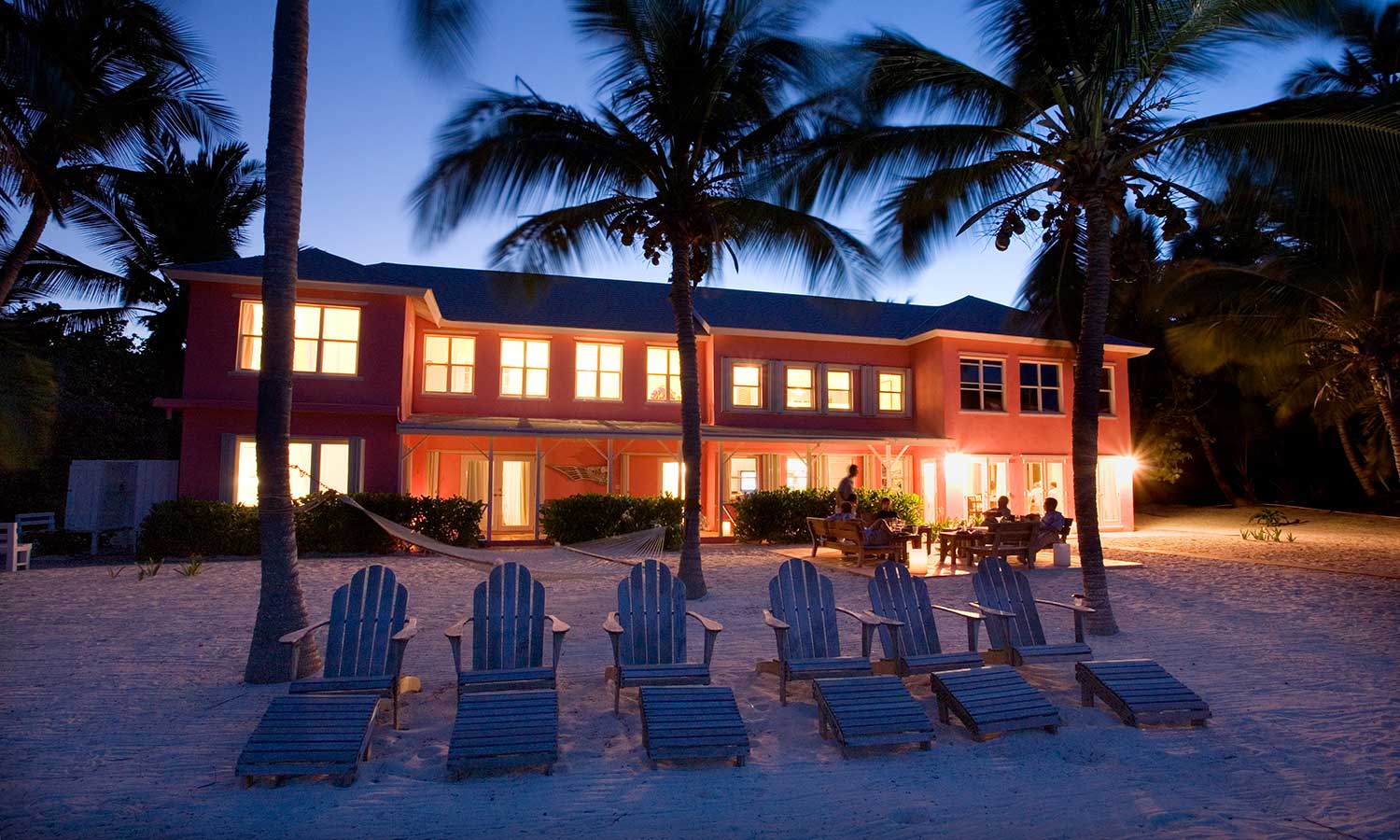
The Berry Islands. Quality over quantity. Not a location where guests can expect to catch lots of bonefish each day, although it is possible and does happen. Where the Berrys shine is size, with an average fish being a healthy 5 pounds and much larger seen and cast to daily — one of the best locations in all the Bahamas for targeting double digit bonefish. Soul Fly Lodge
Grand Bahama. The expanse of flats north and west of Freeport is 85 miles long and productive, and since there are no roads to access it, the habitat sees little angling pressure. Fish range from two and three pounders in easy schools to a four-to-six-pound average, with double-digit bones on these flats too. It’s the easiest flats destination to get to in the Bahamas, with numerous direct daily flights from Miami, West Palm Beach and Fort Lauderdale. North Riding Point Club · Pelican Bay
Crooked Island and Acklins. Less than a hundred kilometers from the Haitian and Cuban coasts, forming an atoll of over 230 square miles. Its huge, shallow lagoon makes a perfect wading area for bonefish and permit. Particularly unspoiled and beautiful, and with its 350 inhabitants the place gives the appearance of somewhere lost in time. Bonefish average about 4 pounds; the island record is 17.6 pounds. Crooked and Acklins Trophy Lodge
The Bights of Andros
If you’re looking at Andros for the first time, the bights are the thing to understand. They are the large connecting channels that bisect the island from east to west, themselves dotted with countless uninhabited cays, and they carve Andros into three quite different fisheries. Which bight your lodge sits on determines the water you’ll fish, the average size of the fish you’ll see, and whether wading is realistic.
North Bight. An enormous network of flats, creeks, rivers, bays and mangrove estuaries that combine to create what I feel is the best big bonefish destination in the Bahamas. Guests can anticipate bonefishing in one to three feet of water, and the majority of the fishing will take place from the skiff. The marl here is fairly white, which allows for very good visibility, but in general it’s a soft bottom — keep that in mind if you’re interested in wading. AIBC · Big Charlie’s · Stafford Creek
Middle Bight. Essentially a huge network of flats and mangroves that bisect the island, providing literally hundreds of miles of fishable water. The bonefish are plentiful and average 3 to 5 pounds with regular appearances of fish 6 to 10 pounds, and several 11, 12 and 13 pound fish are landed every season. The lodges here access both the west and east sides, which means shelter no matter which way the wind is blowing. Mangrove Cay Club · Swains Cay
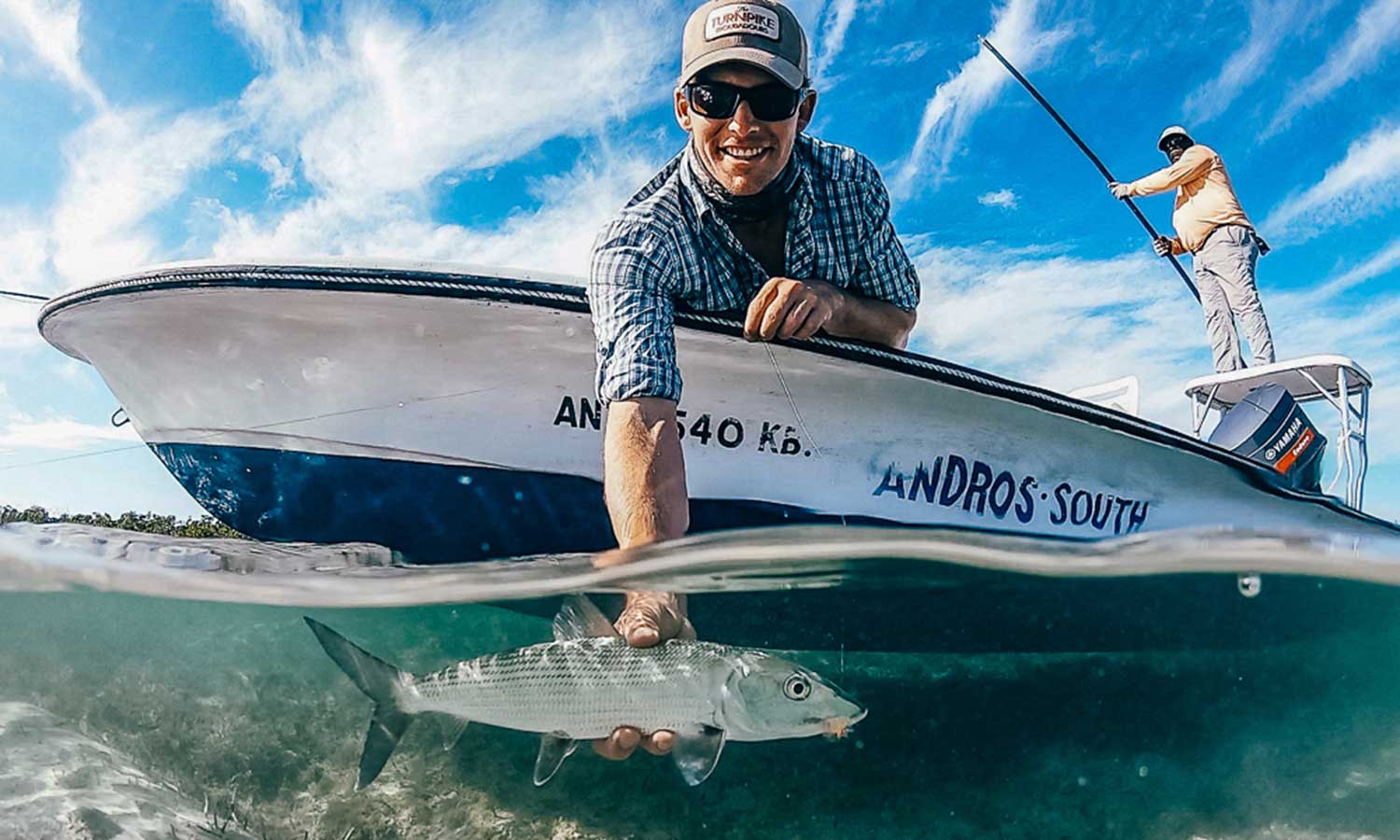
South Bight and South Andros. The flats at the south end are nothing short of remarkable and there are not many places anywhere on earth that offer as many quality bonefishing environments. Countless bays, estuaries, creeks and channels — it would take close to a dozen trips to fish the same water twice. Shallow tidal creeks and marl flats with packed white-sand beds, great for wading. Schoolies run 2 to 4 pounds with much larger fish (5 to 10 pounds) over on the West Coast. Andros boasts the biggest bonefish in the Caribbean and 15-pounders have been caught in South Andros. Mars Bay · Bair’s · Andros South
The West Side. One huge flat over there has been labeled “The Land of the Giants” and justifiably so — due to its remote location and lack of any settlements, good numbers of very large fish can be found here consistently. Most lodges run over when the weather cooperates, about an hour by skiff. However, do not be tricked into thinking that the grass is always greener on the other side of the island. The home waters just minutes away from the lodges are equally productive in both size and numbers, and some of the largest fish to date have been taken within sight of the lodge.
Where you can wade
The majority of the fishing for bones will take place from the skiff. But there is an enormous amount of quality wading to be done in certain parts of the country, and the guides enjoy it as much as the guests do.
- Best: South Andros, where the bottom is a mix of hard rock and dead coral, marl and white sand flats that generally offer good solid footing. The Joulter Cays, where the flats stretch for 20 miles. Exuma. The Berry Islands, right up there with the south end of Andros. Cooperstown on north Abaco. Crooked and Acklins.
- Some: Cherokee Sound and Sandy Point on Abaco, where anglers can expect 2 to 3 days dedicated to wading during a week when conditions allow.
- Limited: the North Bight and the south part of Mangrove Cay, where the bottom is soft.
If you are interested in wading, let your guide know when you get in the skiff so he can plan his day accordingly.
The lodges
Each year I spend two to three weeks scouting new operations to see if they fit what we do. These are the ones I recommend most often.
Mangrove Cay Club — Middle Bight. This may just be my favorite bonefish lodge in the Bahamas and with good reason. Liz Bain runs the lodge with the precision of a Swiss watch and no details are overlooked in its day-to-day operation. Beautifully positioned on the northern edge of the Middle Bight, minutes from Moxey Town and the airstrip. There is no trailering of skiffs — you quite literally take a few steps from the lodge and you are in your skiff and on your way each morning.
Mars Bay Lodge — South Andros. Quite literally at the end of the road, which means you are closer to South Andros flats than any other lodge on the island. Guests are often departing in their skiffs before many other lodge guests further north have even finished breakfast. Bill Howard is the very definition of an owner/operator — he’s owned the lodge for 22 years and knows every aspect of the fishery and of the community of Mars Bay. It’s so far south that it has a bit of a shipwreck feel to it; that’s the remoteness, not the accommodations, which are excellent.
Swains Cay Lodge — Middle Bight. Allows guests the opportunity to fish both the South and Middle Bight. I like this program a lot because it gives anglers an excellent overview of the fishing environment during the course of their stay. Very laid back with a nice chill vibe that is very easy to embrace.
Bair’s Lodge — South Bight. Situated within 120 square miles of inland flats, cays, creeks and mangrove lagoons, positioned half way between the South Bight and Curly Cut Cays. It can almost always provide shelter from the elements if it’s ripping out on the flats. If you are looking for big bonefish with high standards for accommodations and guiding, Bair’s should be high on your list.
Stafford Creek Lodge — North Andros. One of the few facilities that regularly fishes the famous Joulter Cays. Prescott Smith’s father, Charlie Smith, is the inventor of the Crazy Charlie. Guests can expect to depart early each day and to have lunch in the skiffs, out on the flats. There are no bankers’ hours here.
Andros Island Bonefish Club — North Bight. Long recognized as one of the premier bonefishing lodges in the Bahamas. Captain Rupert Leadon has long been considered the foremost expert on fishing the vast flats and waterways of Andros Island.
Big Charlie’s Lodge — North Bight. A small four-bedroom operation right on Cargill Creek in the heart of Behring Point. Ten minutes and you’re in the North Bight.
Andros North cottage — Nicholl’s Town. Phillip and Betsy Rolle’s quaint three bedroom cottage at the northern tip of Andros, and the closest base to the Joulters.
Andros South Lodge — Kemp’s Bay. Blue cabins on the beach. All rooms single occupancy unless requested otherwise.
Soul Fly Lodge — Berry Islands. Part of what makes this lodge so special is that it is not a big facility. Big bonefish, and some of the most consistent permit fishing in the entire country.
North Riding Point Club — Grand Bahama. With nine boat launch sites, the guides have the luxury of considering weather and tide to determine the fishing area that will give guests the best overall experience.
Pelican Bay — Grand Bahama. Properly speaking, not really a lodge but a luxury hotel in Port Lucaya, with over 20 restaurants within walking distance.
Club Peace and Plenty — Exuma. Old world charm dating back to British colonial rule, with all the modern amenities traveling anglers expect. Right in the heart of George Town.
Delphi Club — Abaco. Not your average fishing lodge, and this becomes readily apparent when you first walk into your room. One of the most diverse fishing programs found anywhere in the Bahamas, 45 minutes from Marsh Harbour.
Treasure Cay — Abaco. By no means a traditional bonefish facility, but a resort with access to the northern marls and the lightly fished Cooperstown flats. Please check current availability with the office before planning around this one.
Crooked and Acklins Trophy Lodge — Crooked Island. A small, quiet and private lodge away from large-scale tourism, right on a white sandy beach.
When to go
The trade winds blow almost continually and give the islands a warm, agreeable climate which varies little year round — 70 to 75F September through May, 80 to 85F the rest of the year. Most lodges run mid-October through June or July.
On Andros the season breaks down like this:
- January and February. Best months for big bonefish. Lots of barracuda on the flats.
- March and April. Peak bonefish season, and a great time for tarpon on the west side. This timeframe always fills up fast, particularly at the better lodges and facilities that we represent.
- May and June. Bonefish, tarpon and barracuda plentiful. Calmer winds, possible afternoon showers.
- July, August and September. Morning fishing is best as the flats heat up quickly. Calmest winds, with the possibility of tropical storms.
- October, November and December. All bights very good for bonefish, with resident tarpon on the west side.
I’ve had more than a few Februaries where I’ve deeply regretted not booking myself a Bahamas trip. If there’s one thing I know about myself, it’s that I like to have a good trip to look forward to. If you have flexibility on dates, tell us — it opens up a lot of options.
A word on flies
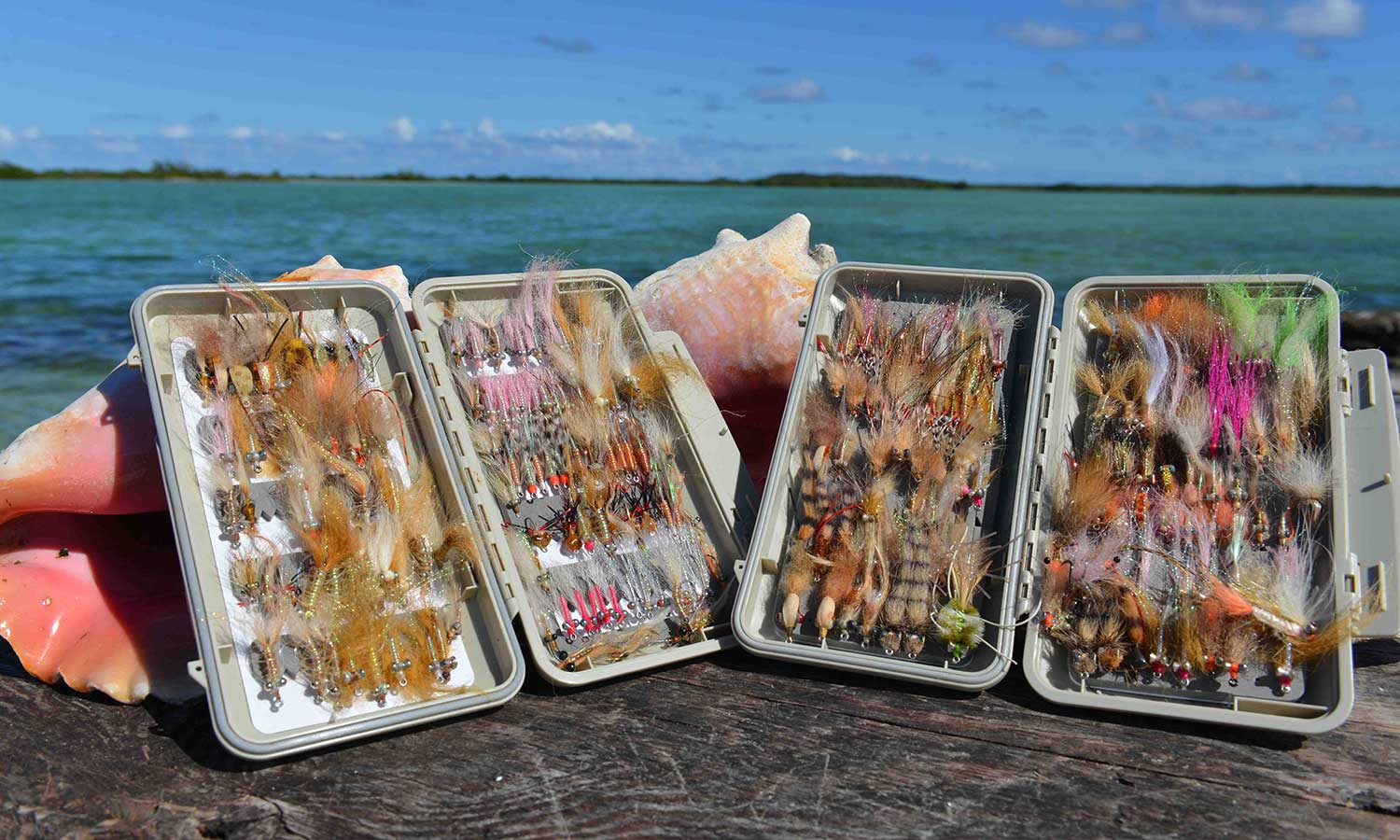
I’ve noticed a trend where many guests bring the right fly patterns for a successful bonefish trip, but these patterns have little variation in terms of size.
While I firmly believe that big bonefish like to eat big flies, bonefish travel and feed in a variety of water depths, and you will catch more fish if your fly size matches the water depth you are fishing. It is much better to have only two or three good patterns in your fly box tied in a wide variety of sizes and weights than a fly box stuffed to the gills with 12 or more patterns tied in only one or two sizes.
More on building a Bahamas fly box: Click Here
If you have not been on a saltwater trip for six months or more, it’s always a good idea to take stock of your gear and see what needs replacing.
If it’s your first bonefish trip
Communicate with your guide. Your guide is going to see about 90% of the fish before you do. Spend 5 to 10 minutes chatting the first day about how he likes to call a fish. Does he use feet or meters? Is there a specific word or phrase he uses? A quick discussion before you start fishing can go a long way.
Seeing the fish. Don’t be looking for a fish shape in the water because that’s not what you are going to see. Keep your eyes relaxed and moving left and right, slowly looking for an anomaly or something that doesn’t quite fit — a shadow, a slightly different shade of color, maybe a little ripple. Don’t focus on any one thing. Find the little thing that stands out. That is what a bonefish looks like.
Don’t trout set. Instead of lifting the rod tip when you feel pressure, you need to strip set. A firm tug with your stripping hand will set the hook.
For all ten tips: Slipstream Angling bonefish tips for beginners.
Before you travel
A valid passport good for six months after the trip has been completed is required. The Bahamian Government is very strict about the six month stipulation and they’ve been known to turn anglers away who don’t have sufficient time left on their passport. Just give it a quick look to see where it stands.
Most Andros trips route through Nassau, where the airport is divided into Domestic and International terminals in different buildings. You must clear Bahamas Customs with your luggage in Nassau before making your connection, or your luggage won’t make it.
Rates vary considerably between the lodges, and one thing to watch when you’re comparing: some quote inclusive of the 10% Bahamian VAT and others add it on top. Current pricing for every operation is on its own page, and the office is happy to walk you through the real all-in number.
Get in touch
For availability, and for figuring out which lodge and island is the right fit for you, please contact me and we’ll get to work on getting you into the right place, at the right time.
Call the office at 1-866-644-7703 or email info@slipstreamangling.com.