• Cayo Romano
  • Cayo Largo
  • Los Roques
  • Permit School
  • Zapata
  • #
 
Summer Tarpon
by Richard French, 26 August 2010

The warm summer months mean one thing when you get into the tropical waters of Florida and the Caribbean. TARPON! And lots of them!!! The 2010 summer months have produced a bumper crop of excellent tarpon fishing from the Boca Grande Pass down into the rich Caribbean water of Belize, Cuba and Mexico. August in particular has been absolutely stellar for producing some very big tarpon in a variety of places.

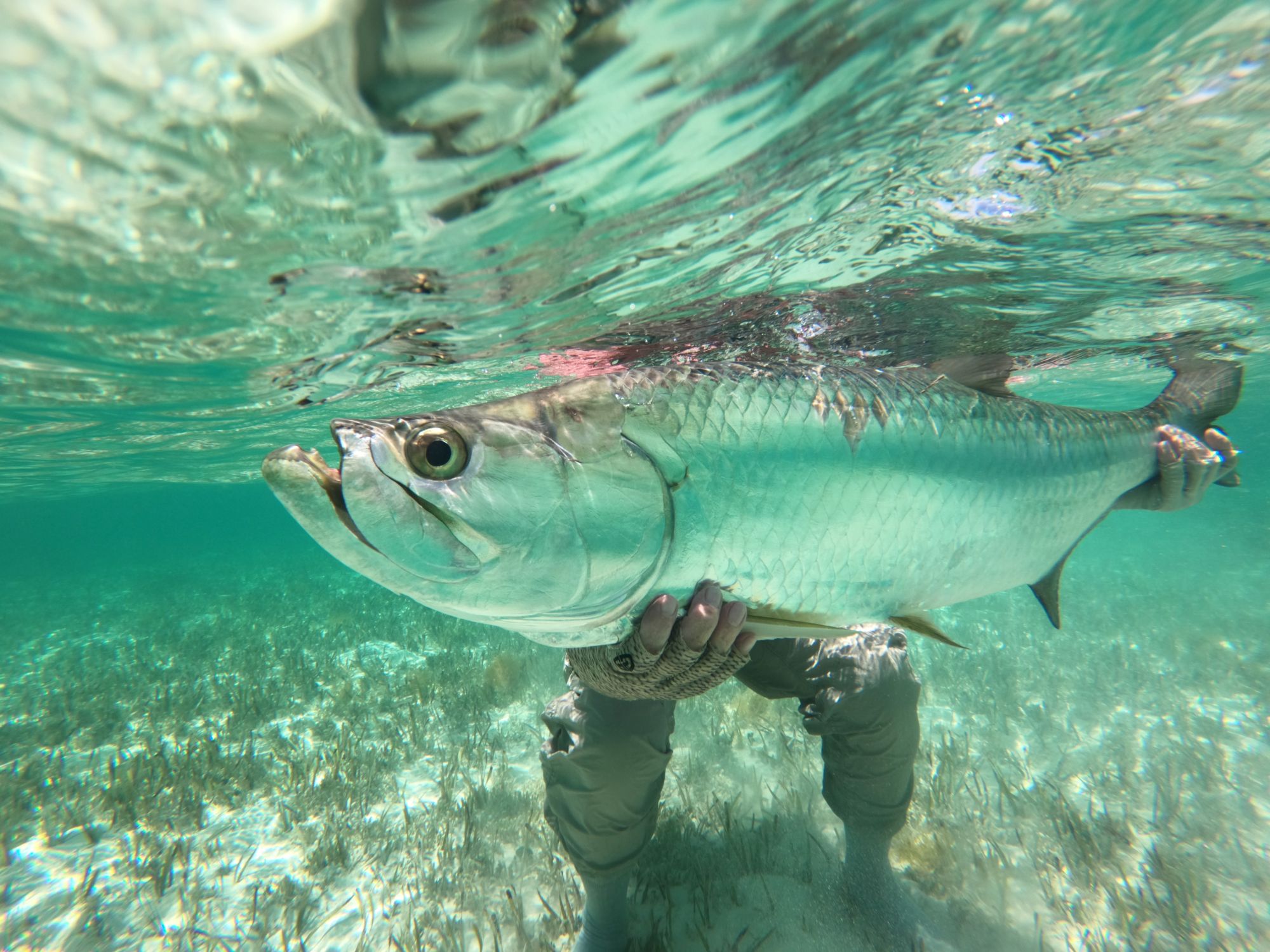
Chris P. and his bride spent their Honeymoon in Belize where he actually got to fish for 7 days (No, she does not have a sister. I know because I asked!!!) On his second day ever fly fishing the salt, out of San Pedro, he landed a Super Slam. Unbelievable! We then sent them down to Caye Caulker to fish for 3 days and it was there that Chris got into some huge tarpon. He fought a tarpon for close to 2 hours guestitimted at 150 pounds before the circle hook broke. The fish above weighed about 65 pounds and Chirs was absolutely thrilled to get this one into the boat for a picture. 

Our old friend Dario C. is a self professed tarpon nut and he plans his trips around when he thinks the large tarpon will show up. He landed this absolute beast in the Rio Hatiguanico, Matanzas Cuba. The Hatiguanico is renowned for its numbers of juvenile tarpon that are found it its waters year round. Fish of this size in the river are rare but leave it to Dario to find them.

Steve F sent us this incredible photo which he took at about 7 am just south of the Boca Grande earlier this month. He had just gotten the tarpon to the boat when this huge Hammerhead Shark showed up looking for an easy meal. Steve was smart and released the drag right away, allowing the tarpon to bolt without being held back by the line. Steve and his wide starting stomping on the bottom of their flats skiff and the shark took off. They reeled in the tarpon after tightening the drag and released her to live another day, completely unharmed. Just look at the size of the dorsal fin on the Hammerhead!!! That is one big shark. 

 
Cayo Romano, Cuba - A newly discovered flats fishing paradise
by Richard French, 02 August 2010

One of my passions is scouting out new areas of the world that have not seen much if any angling pressure. There is no doubt that as the world gets smaller, it is getting increasingly harder to find these kinds of places. Nonetheless, I try to dedicate at least two weeks each year to doing exactly that. I find the thrill of stepping out into the unknown an intoxicating mixture of hope and excitement and I know how truly fortunate I am to be able to do this. When I’m on one of these trips, I often think of many of our clients, who have become such good friends over the years. Most of our anglers can’t get away to do this kind of trip and really, they shouldn’t. Exploratory trips are frequently a huge waste of time and when you have so few days to fish during the year, it’s simply not worth the risk. But for me, this is my job. If I come back covered in bug bites and not having seen a fish all week, it doesn’t matter. Far better me than any of our clients! And besides, terrible bugs, lower lumbar destroying beds and no fish are often the least of my problems when working one of these adventures.  I’ve found myself in some pretty sketchy situations over the years, from blown airplane engines as I’m barreling down a dirt runway in the jungle to irate soldiers armed to the teeth with Kalasknikovs. You just never know what’s around the corner when you’re fishing the edges. Sometimes it’s a total bust. Other times you’ll get an inkling of what a location could be, if it had guides, running water, engines that work and a place to sleep where you weren’t getting rained on all night. On very rare occasions, I’ll find a location that’s the equivalent of hitting a home run. Excellent fishing, good accommodations, transportation infrastructure, a reliable guide network, etc. The last week of July, I hit one out of the park.

Cayo Romano/Cruz, Cuba
I just got back from fishing the Cayo Romano/Cruz area, on the eastern edge of the Jardines Del Rey, in Cameguey, Cuba. The Cayo Romano/Cruz Cayo area is located off the northern coast of Cuba, about a 9 hour drive from Havana. I flew from Havana to Cayo Coco and then drove 90 minutes east to the town of Brasil, which is where the lodge is located. Cayo Romano is the largest of the island chain known as the Sabana-Camaguey Archipelago (or more commonly known as the Jardines del Rey, Gardens of the King). Some of the efforts to increase its desirability as a tourist destination are visible in the aerial photograph above, including a causeway to the mainland in the upper right corner of the shot. The airstrip built on Cayo Coco in 1995 is visible as the long rectangular white patch at the bottom right. The large island to the center left of the aerial is Cayo Cruz, where the flats skiffs depart from each morning. Further left you can see the barrier reef, which is one of the least explored reefs in the Western Hemisphere. While Cayo Coco has been developed heavily over the past 15 years, Cayo Romano/Cruz has been left completely untouched, other than the causeway which runs from the mainland up to Cayo Cruz. There are no hotels, no busloads of tourists. Nothing! All you’ll find is a pristine natural environment that is home to a staggering array of flora and fauna.  This area is home to an estimated 40,000 flamingoes, which is no surprise given that the islands are low-lying, with much of the region covered by mangroves and wetlands. The Cayo Romano/Cruz fishery has been designated as a sport fish only area, meaning that no commercial fishing is permitted over an area of 366 square kilometers. This means that on any given day, each flats skiff has an incredible 54 square kilometers of flats, bays, islands and estuaries, all to itself. The Cuban government tightly monitors the area and all anglers have to be checked in and out each day at a Cuban military checkpoint.
The fishery has actually been operating for two years now but the area has not seen many anglers since it opened in 2008.

The flats fishing was so far beyond my level of expectation when I got there, that I actually had some trouble processing the experience for the first couple of days. The bonefish were a healthy 4-5 pound average and I hooked and lost 2 fish on my last day that were at least 10 pounds. These fish are not in any way educated and they attacked my flies as though they’d never eaten before. I found tailers, singles, doubles and large schools of several hundred fish. The quality of the permit fishing was a real eye opener and I had shots at many tailing fish during my 5 days. And although I battled a fair bit of rain, wind and cloudy conditions, I found permit each day, tailing in 2-3 feet of water. It pleasantly reminded me of permit fishing in Southern Belize. On my third day alone, I saw about 20 permit while looking for bonefish and I had shots at 7 of them. How untouched is this fishery? Well, on my second day of fishing, I was with two guides in the boat. I had asked to have two guides fish with me each day (late July and I was the only angler there) so that I could meet them all and get a feel for each of their skill levels. The guides took me to a specific section of flats that they were very eager to show me. Numerous good sized bonefish was the promise.

It’s about an hour later we’re hammering 4-6 pound bones while drifting down the edge of a long skinny island. I’m at the front of the boat and the two guides are at the back, one of whom was on the poling platform. About a half mile further down I see this enormous white sand flat that stretched about as far as I could see. The guides were starting to veer off and take me to a new location they wanted to show me. I asked them to take me further down to the huge white sand flat that I’d been eying off in the distance. The guides told me that they’d never been that far down in this area and that they did not know what we’d find there. They said that they’d never gone down that far because they always found plenty of fish in the area that we were currently fishing. I said, “lets go check it out”, and so we did. As soon as we polled up to the edge of the sand flat, we saw several large bones weighing about 6-7 pounds, just happily tailing away in about 4 inches of water. My jaw was practically dragging on the sand. I got out of the skiff and cast to the closest fish. It hammered my size 2 Gotcha as soon as it hit the water. I did not even have time to strip the fly. I then spent the next 60 minutes walking this beautiful hard packed white sand flat, while casting to many large fish. I must have caught about 8 or 9 bonefish during the hour, each weighing at least 5 pounds. It was absolutely magical! I saw so many areas in my 5 days at Romano/Cruz where I would ask the guide, “what’s that place like” and they would say “We don’t know. We’ve never fished there before”.

The Cayo Romano/Cruz fishery has scarcely been explored and the guides have just scratched the surface in terms of what is actually there.

Needless to say, I cannot wait to get back there.

If you would like more information about this destination or would like to join one of my two hosted weeks at Cayo Romano/Cruz in May of 2011, please feel free to contact me at your earliest convenience.

Week 1 - April 30 to May 8, 2011
Week 2 - May 7 to 15, 2011

Visit the Cayo Romano/Cruz section of our web site for more information.

 
March 22nd, 2010
by Richard French, 25 March 2010

Grand River Troutfitters got back last week from their annual shop trip to the Zapata Peninsula in Cuba. The guys had to contend with some really tough weather the first few days of the trip. The colder temperatures and strong winds, which have been so prevalent throughout the Caribbean this winter, were a big factor for the guys as they fished the Salinas flats system for the first 3 days. The river however remained slow throughout the week. There just weren’t the usual number of tarpon taken and catch rates were way down. Ken Collins, using an intermediate sinking line did have a good day with 15 tarpon landed as well as a very nice snook.

Black Death was the productive fly in the river for Ken. As usual though, the flats were highly productive in spite of the conditions and when more favorable conditions came in later in the week, the fishing was superb. 1300 bonefish were spotted by the group of 8 anglers over 5 days with 240 bonefish booked and 147 landed. The last 2 days were excellent with double digit catches reported by 5 of the 8 rods.

The size 4 Gotcha seemed to be the top fly for the week.

There were many snook on the flats during the week and one guest estimated that he had seen 40 in one day, some of which were enormous. The end of the week pig roast was a
big hit and all the guides were humbled by Kens incredible casting ability. Cold beer and rum were flowing at the party and everyone enjoyed watching Ken put on one of his incredible casting clinics.

 
Los Roques Venezuela
by Richard French, 13 March 2010

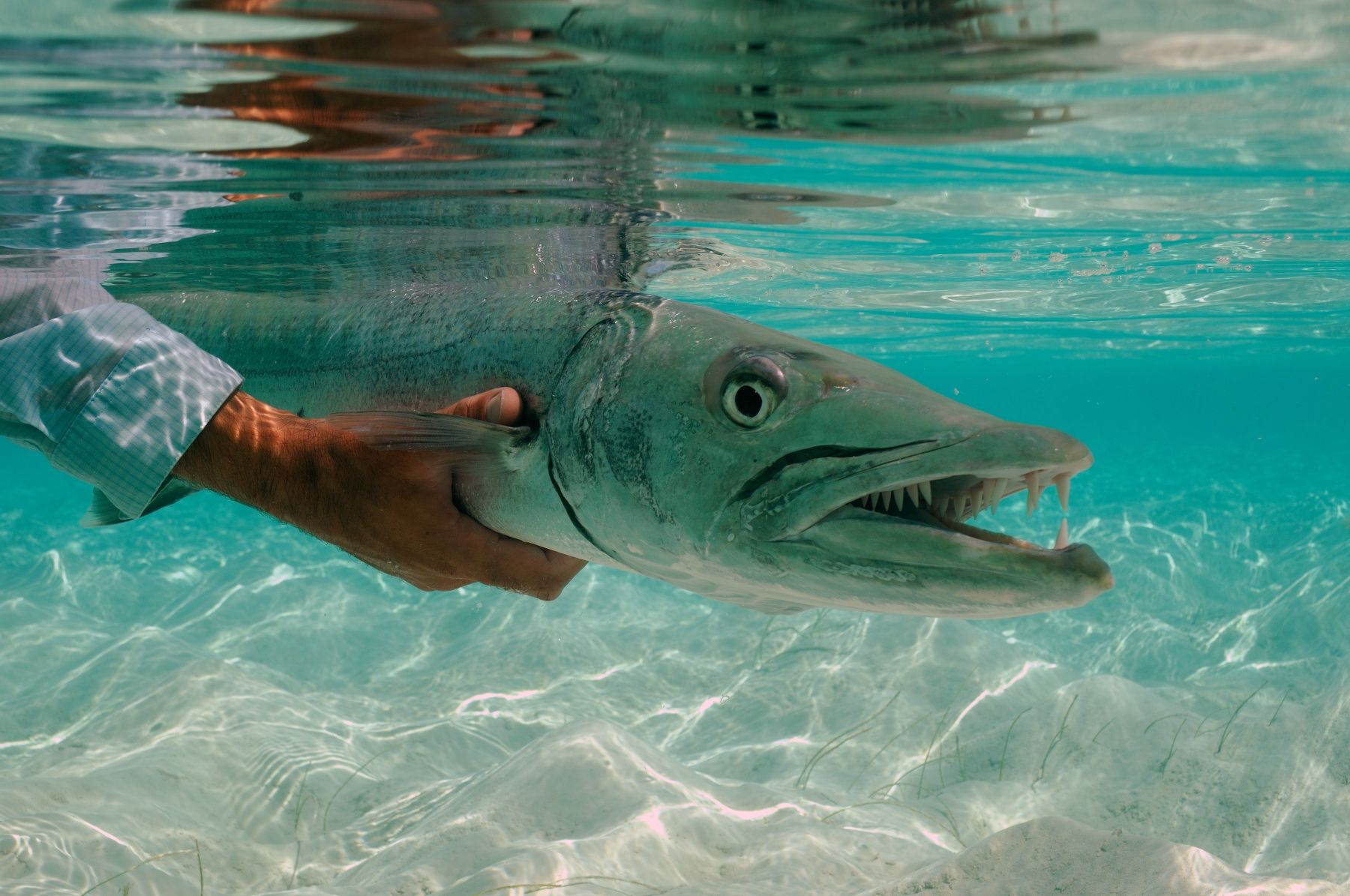
Just got home from a superb week of fishing Los Roques Venezuela with Alex d Elena at Pez Raton Lodge. Our group of 8 consisted largely of long time friends who I have fished and travelled with to many of the most remote fishing destinations on the planet. It was truly a wonderful week!  We had a little bit of sketchy weather with some strong winds towards the end of the week and had to contend with an unusual 2 day rip tide that comes about once every 2 years or so. It certainly did not take away from the fishing though! There were numerous 4-5 pound bonefish fish caught each day along with the largest bonefish of the week (7.5 pounds) which was landed by Connecticut resident Carole Reichhelm, on the her last day. Carole also managed to land the top daily total of 27 bones landed and released. Randal Glaholt from Calgary lost a 30 pound permit on his first morning and landed a 25 pound jack on day 3. He focused as much as possible on permit during the week which was easy to do given how many big permit were cruising the north east part of the archipelago. Cathy Helms landed a large barracuda of about 25 pounds while her husband Zack outdid her two days later with his own 35 pounder.

There were plenty of tarpon around during the week both holding tight to the mangroves as well as larger fish harassing the many bait balls found along the shore as well as those out in deeper water. For those interested in a highly diverse fishery with a wide variety of species and fishing opportunities, it would be tough to beat Los Roques.  Slipstream Angling Adventures has 2 weeks booked out in late February and early March of 2011 so please let me know if you have any interest in joining one of our groups heading down to Los Roques next year. 

 
Summer Trip Planning
by Richard French, 26 January 2010

It’s sometimes tough to think about your summer fishing trip to places like Alaska, Canada or Iceland when it’s late January and its -20 outside, with 3 feet of snow on the ground. Our natural instinct is to still be thinking about a trip to Belize, the Bahamas or Cuba, where the idea of sand, palm trees and sun drenched days on the flats call far more strongly to our wondering angling spirit than loading your gear and climbing on board a bush plane for a flight over snow capped mountains.The summer fishing season in the Northern Hemisphere is very short, with many lodges operating with summer seasons consisting of 12 weeks per year or less. Mid June to Mid September is about it, so space really is at a premium. Especially when you are thinking about staying at one of the better lodges, where prime weeks are often booked out up to two years in advance.  If you want to go to Canada, Alaska or Norway in the summer of 2010, you need to be thinking about and planning your trip, now. If you let it side into March or April, you will be left sorely disappointed in terms of optimal weeks. Particularly, if you want to be species specific on your trip. For example, if you want to target the BIG RAINBOWS of Alaska, the best time of year for you to go is late in the season, having let the big ‘bows fatten up all summer. This means that there will likely only be 2 or 3 optimal weeks for this pursuit. If you are not thinking about this now, I assure you that there are plenty of smart anglers who are and they are the ones who will end up with the Golden weeks that are sure to produce the biggest fish.

Even if you are not being species specific, the same goes for places like Norway and Russia, where environmental conditions like the river flows and rain levels dictate that the best times to fish for Atlantic Salmon are generally the last 3 weeks of June and into the second week in July. As a result, these weeks are in great demand and you won’t even get a sniff of one of these weeks if you’re calling the month or two before.

Start thinking about your summer trip now. Figure out what your priorities for the trip are and when the best time for you to go is. If you’re not sure about optimal weeks or if you have any questions about any of our outstanding Northern destinations and facilities, please call me and I’ll be happy to help. 

Call us Toll-Free at 866-644-7703

Next Page